Welcome to EEE Interview Tips
For Your Pre-Professional Preparation!
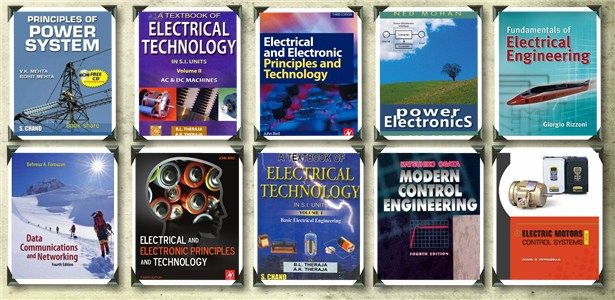
Download EEEBooks
To Download Electrical and Electronics Ebooks click the "EEE Library" menu! Enjoy!!
EEE Interview Tips
Leave Your Comments, Views And Questions.
Learn to make Electronics
Burn things out, mess things up - that's how you learn to Make Electronics! Enjoyy!!
EEE Forum
Drop your Ideas, Thoughts, Questions and Comments!
March 31, 2017
The Discovery of Electricity Timeline.
The Discovery of Electricity:
![]() |
| Schematic diagram of a copper–zinc voltaic pile. |
|
v
|
Democritus
(460
|
|
v
|
Charles
|
|
v
|
Luigi Galvani (1737–1798) discovers that two unlike metals immersed
in
|
|
v
|
Alessandro Volta (1745–1827)
discovers that a current flows between
two connected unlike metals in a salt solution and, thus, invents the
battery.
|
|
v
|
|
|
v
|
André Ampere (1775–1836) develops the
theory of magnetic lines of force and quantifies electric current for the first time.
|
|
v
|
Hans Christian Ørsted (1777–1851) discovers a connection between electric
current and magnetism and a way to measure electric current by the deflection of a magnet.
|
|
v
|
Georg Ohm (1787–1854) discovers the
relationship (Ohm’s Law) between voltage, current, and resistance in a
circuit.
|
|
v
|
Michael Faraday (1791–1867) analyzes the chemical reactions in
|
|
v
|
James Clerk Maxwell (1831–1879)
develops the mathematical equations relating electricity and
magnetism.
|
|
v
|
Joseph Thomson (1856–1940) proves that electricity consists of
electrons.
|
March 17, 2017
What is the difference between Electric Motor and Electric Generator?
Difference between Electric Motor and Electric Generator:
- A generator converts mechanical energy to electrical energy, while motor converts mechanical energy to electrical energy.
- In a generator, a shaft attached to the rotor is driven by a mechanical force and electric current is produced in the armature windings, while the shaft of a motor is driven by the magnetic forces developed between the armature and field;
current has to be supplied to the armature winding. - Motors (generally a moving charge in a magnetic field) obey Fleming`s left-hand rule, while the generator obeys Fleming’s right-hand rule.
March 14, 2017
What are the Advantages of Integrated Circuits (ICs)?
Advantages of Integrated Circuits:
The major advantages of integrated circuits over those made by interconnecting discrete components are as follows:
- Extremely small size – Thousands times smaller than discrete circuits. It is because of fabrication of various circuit elements in a single chip of semiconductor material.
- Very small weight owing to
miniaturised circuit. - Very low cost because of simultaneous production of hundreds of similar circuits on a small semiconductor wafer. Owing to mass production of an IC costs as much as an individual transistor.
- More reliable because of elimination of soldered joints and need for fewer interconnections.
- Lower power consumption because of their smaller size.
- Easy replacement as it is more economical to replace them than to repair them.
- Increased operating speed because of absence of parasitic capacitance effect.
- Close matching of components and temperature coefficients because of bulk production in batches.
- Improved functional performance as more complex circuits can be fabricated for achieving better characteristics.
Greater ability of operating at extreme temperatures.- Suitable for small signal operation because of no chance of stray electrical pickup as various components of an INC are located very close to each other on a silicon wafer.
- No component project above the chip surface in an INC as all the components are formed within the chip.
What are the limitations of integrated circuits?
The integrated circuits have few limitations also, as listed below:
- In an IC the various components are part of a small semi-conductor and the individual component or components cannot be
removed, replaced , therefore, if any component in an IC fails, the whole IChas replaced by the new one. rating as it is not possible to manufactureLimited power power greater than 10 Watt) ICs.high - Need of connecting inductors and transformers exterior to the conductor chip as it is not possible to fabricate inductors and
transform on the semi-conductor chip surface. - Operations at low voltage as ICs function at fairly low voltage.
- Quite delicate in handling as these cannot withstand rough handling or excessive heat.
- Need of connecting capacitor exterior to the semi-conductor chip as it is neither convenient nor economical to fabricate capacitances exceeding 30pF. Therefore, for higher values of capacitance, discrete
components, exterior to IC chip are connected. - High grade P-N-P assembly is not possible.
- Low temperature coefficient is difficult to be achieved.
- Difficult to fabricate an IC with low noise.
- Large value of saturation resistance of transistors.
- Voltage dependence of resistors and capacitors.
- The diffusion processes and other related procedures used in the fabrication process are not good enough to permit a precise control of the parameter
values the circuit elements. However, control of the ratios is at afor sufficiently acceptable level.
Subscribe to:
Posts (Atom)