Welcome to EEE Interview Tips

For Your Pre-Professional Preparation!

Download EEEBooks

To Download Electrical and Electronics Ebooks click the "EEE Library" menu! Enjoy!!

EEE Interview Tips

Leave Your Comments, Views And Questions.

Learn to make Electronics

Burn things out, mess things up - that's how you learn to Make Electronics! Enjoyy!!

EEE Forum

Drop your Ideas, Thoughts, Questions and Comments!

Showing posts with label Switchgear and Protection. Show all posts

February 22, 2017

What are the functions of Protective Relays?

Figure: Protective Relaying System

Functions of Protective Relays:

  • To detect the faults. For Example: Short circuits.
  • To detect abnormal operating conditions. For example: Overloads, unbalances, low voltage or frequency.
  • To Initiate the operation of the circuit breaker to isolate the defective element from the rest of the system, thereby protecting the system from damages consequent to the fault.
  • To Control and supervision. For example: Automatic reclosing, bus transfer, synch-check.

January 15, 2017

What is RMU (Ring Main Unit) and Its Use in Electrical Power Distribution System?

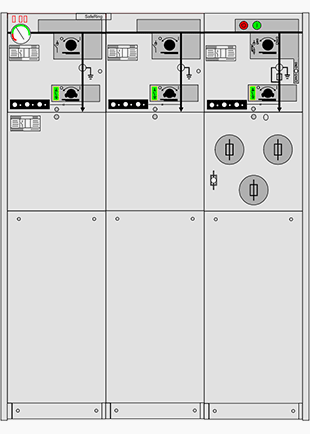
Ring Main Unit (RMU) is a 11 KV or 33 KV HT panel having 3 nos. of switches (Circuit Breakers or Isolators or LBS) that are 2 for incoming one for outgoing. It enables consumer use 2 sources of HT power in at the same metering point. It is a totally sealed, gas-insulated compact switchgear unit.

RMU is to be used two incoming with mechanical or electrical interlock and one out going  to the load generally but some times one incoming and two outgoings medium voltage supplies. In engineering distribution this is called flexible power supply. Now a day SF6 (Sulfer Hexa-Floride) circuit breakers going to be used. These are maintenance free breakers. 


Figure 1 – Outlook of a typical three-feeder 24 kV RMU unit

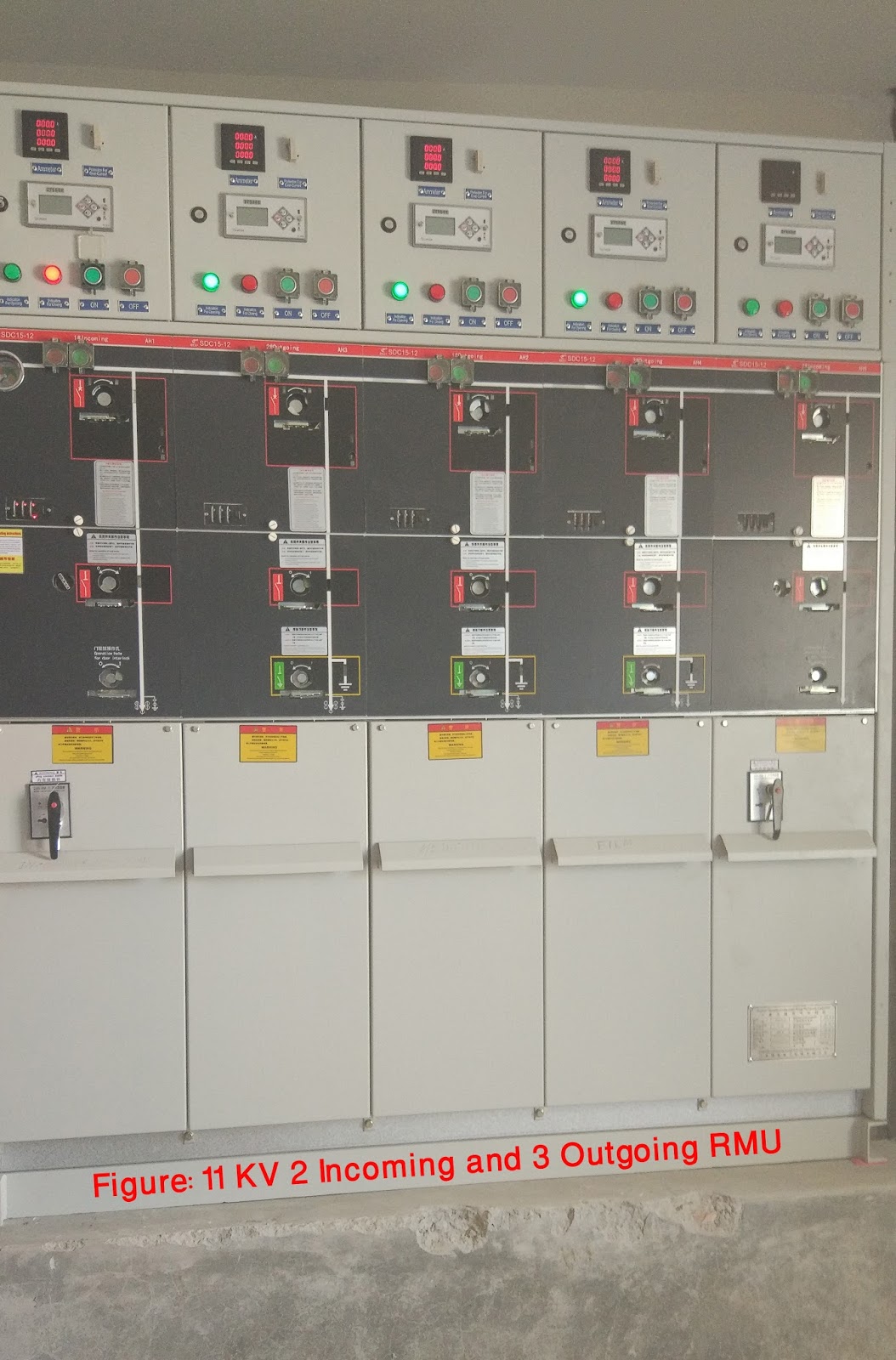
Figure 2- 11 KV 2 Incoming and 3 Outgoing RMU at Bangladesh Film Archive.

Ring Main Unit is used in a secondary distribution system. It is basically used for an uninterrupted power supply. Alongside, it also protects your secondary side transformer from the occasional transient currents. 

September 15, 2016

What are the various kind of cables used for transmission?

Cables, which are used for transmitting power, can be categorized in three forms:

  • Low-tension cables, which can transmit voltage upto 1000 volts.
  • High-tension cables can transmit voltage upto 23000 volts.
  • Super tension cables can transmit voltage 66 kV to 132 kV.

September 12, 2016

What is the difference between Grounding and Earthing?

Difference between Grounding and Earthing:


There is no major difference between earthing and Grounding, both means “Connecting an electrical circuit or device to the Earth”. This serves various purposes like to drain away unwanted currents, to provide a reference voltage for circuits needing one, to lead lightning away from delicate equipment.

Even though there is a micro difference between grounding and earthing:


Grounding
Earthing
Definition
Grounding means connecting the live part (it means the part which carries current under normal condition) to the earth for example neutral of power transformer.
Earthing means connecting the dead part (it means the part which does not carries current under normal condition) to the earth for example electrical equipment’s frames, enclosures, supports etc .
Difference in Terminology
Grounding is the commonly word used for earthing in the North American standards like IEEE, NEC, ANSI.
Earthing is used in European, Commonwealth countries and Britain standards like IS and IEC etc.
Purpose
Grounding refers the current carrying part of the system such as neutral (of the transformer or generator).
The purpose of earthing is to minimize the risk of receiving an electric shock if touching metal parts when a fault is present. Generally green wire is used for this as a nomenclature.
Balancing the Load Vs Safety
Ground is a source for unwanted currents and also as a return path for main current sometimes.
Earthing is done not for return path but only for protection of delicate equipments. It is an alternate low resistance path for current.
When we take out the neutral for a three phase unbalanced connection and send it to ground, it is called grounding. Grounding is done to balance unbalanced load.
 While earthing is used between the equipment and earth pit so as to avoid electrical shock and equipment damage.
Equipment Protection Vs Human Safety
Because of lightening, line surges or unintentional contact with other high voltage lines, dangerously high voltages can develop in the electrical distribution system wires. Grounding provides a safe, alternate path around the electrical system of your house thus minimizing damage from such occurrences. It is just a return path.
Earthing is to ensure safety or Protection of electrical equipment and Human by discharging the electrical energy to the earth. Earthing is a preventive measure.
Example
Grounding of neutral point of a star connected transformer.
Earthing of electrical equipment’s frames, enclosures, supports etc.


November 16, 2015

Why star delta starter is preferred with induction motor?

Figure: Star Delta Starter of Induction Motor.


Star delta starter is preferred with induction motor due to following reasons:

  • Starting current is reduced 3-4 times of the direct current due to which voltage drops and hence it causes less losses.
  • Star delta starter circuit comes in circuit first during starting of motor, which reduces voltage 3 times, that is why current also reduces up to 3 times and hence less motor burning is caused.
  • The operation of the star-delta method is simple and rugged.
  • It is relatively cheap compared to other reduced voltage methods.
  • Good Torque/Current Performance.
  • The components require very little space.
  • The most significant advantage of using Star-Delta starting is the huge reduction in the starting current of the motor, which will result in a significant cost saving on cables, transformers and switch gear. 

July 28, 2015

What is the difference between a four point starter and three point starter?

The shunt connection in four point starter is provided separately form the line where as in three point starter it is connected with line which is the drawback in three point starter.

What are the Benefits of improved PF of a motor?

Benefits of improved PF:
• Reduced kVA
• Reduced losses
• Improved voltage regulation
• Increased efficiency of plant electrical system. 

July 12, 2013

What are the Functions of Substation Equipment?

Functions of Substation Equipments:


Sl. No.
Equipment
Function

  1.  
Bus-Bar
Incoming & outgoing circuits Connected to bus-bar

  1.  
Circuit Breaker
Automatic switching during normal or abnormal conditions

  1.  
Isolators
Disconnection under no-load condition for safety, isolation and maintenance.

  1.  
Earthing switch
To discharge the voltage on deadlines to earth

  1.  
Current Transformer
To step-down currents for measurement, control & protection

  1.  
Voltage Transformer
To step-down voltages for measurement, control & protection

  1.  
Lightning Arrester
To discharge lightning over voltages and switching over voltages to earth

  1.  
Shunt reactor
To control over voltages by providing reactive power compensation

  1.  
Neutral-Grounding resistor
To limit earth fault current

  1.  
Coupling capacitor
To provide connection between high voltage line & PLCC equipment

  1.  
Line –Trap
To prevent high frequency signals from entering other zones.

  1.  
Shunt capacitors
To provide compensations to reactive loads of lagging power factors

  1.  
Power Transformer
To step-up or step-down the voltage and transfer power from one a.c. voltage another a.c. voltage at the same frequency.

  1.  
Series Capacitor
Compensation of long lines.

What is REF relay?

It is restricted earth fault relay. When the fault occurs very near to the neutral point of the transformer, the voltage available to drive the earth circuit is very small, which may not be sufficient to activate the relay, unless the relay is set for a very low current. Hence the zone of protection in the winding of the transformer is restricted to cover only around 85%. Hence the relay is called REF relay.

What are the errors in Current Transformer?

(a) Ratio error
Percentage ratio error = [(Nominal ratio – Actual ratio)/Actual ratio] x 100
The value of transformation ratio is not equal to the turns ratio.

(b) Phase angle error:
Phase angle =180/π[(ImCos δ-I1Sin δ)/nIs]

What is an arc? Give the two methods of arc interruption?

Arc is a phenomenon occurring when the two contacts of a circuit breaker separate under heavy load or fault or short circuit condition.

Methods of arc interruption: 
  1. High resistance interruption:-the arc resistance is increased by elongating, and splitting the arc so that the arc is fully extinguished 
  2. Current zero method:-The arc is interrupted at current zero position that occurs 100 times a second in case of 50Hz power system frequency in ac.

What do you mean by current chopping?

When interrupting low inductive currents such as magnetizing currents of transformer, shunt reactor, the rapid deionization of the contact space and blast effect may cause the current to be interrupted before the natural current zero. This phenomenon of interruption of the current before its natural zero is called current chopping.

Related Posts Plugin for WordPress, Blogger...